What We Do

We carry out structured physical condition inspections of buses and prepare clear, evidence-based reports.

Our services are suited to:

  • Bus operators
  • Fleet owners
  • Asset managers
  • Project teams requiring independent condition assessment

Inspections are completed onsite at your depot and coordinated to minimise operational disruption.

Bus Condition Inspections

Each inspection involves a systematic review of the bus, with a condition rating framework consistently applied across all inspected components.

Typical inspection scope includes:

  • Chassis and structural frame (visual inspection)
  • Body and internal structure
  • Brakes
  • Steering & Suspension
  • Wheels and tyres
  • Engine and drivetrain (visual inspection) with engine idle
  • Electrical
  • Doors, glazing, flooring, and internal fit-out
  • Lighting

The inspection approach is non-intrusive and based on visual assessment, condition indicators, and observed deterioration.

Condition Scoring

We apply a clear and consistent condition rating system (typically 1 to 5) to each inspected element.

This allows:

  • Comparison between individual buses
  • Identification of higher-risk components
  • Prioritisation of maintenance activities
  • Tracking of condition trends across a fleet

All ratings are supported by written observations and photographic evidence.

Reporting

Following inspection, we provide a structured condition report that typically includes:

  • Bus-by-bus condition summaries
  • Component-level condition ratings
  • Photographic records
  • Identified defects and risks
  • Recommended actions (urgent, planned, monitor)
  • Key observations and recurring issues (for multi-bus inspections)

Reports are written in plain language and designed for practical use by operators and maintenance teams.

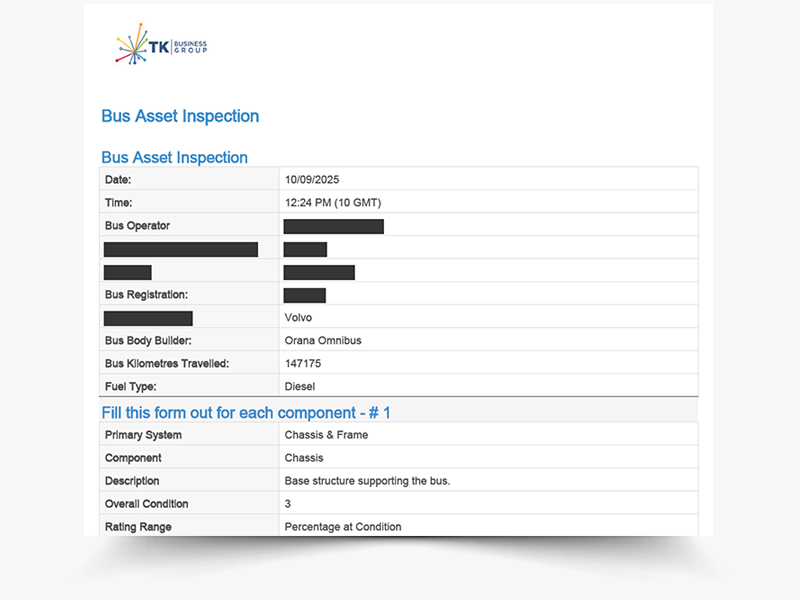
Sample Bus Inspection Report

To understand the level of detail and reporting format we provide, you can download a sample bus condition inspection report.

The sample report demonstrates:

  • Condition scoring methodology
  • Component-level assessments
  • Photographic documentation
  • Recommended actions and observations
  • Overall reporting structure

[Download Sample Bus Inspection Report]

(Sample report provided for reference only. Scope and content may vary depending on fleet type and inspection requirements.)

Depot inspections

Inspections are completed onsite and coordinated with depot staff and workshop availability.

Issue escalation

Any significant safety or operational concerns identified during inspection are communicated promptly.

Report delivery

Final reports are issued within the agreed timeframe.

Scope confirmation

Fleet size, depot locations, inspection requirements, and reporting outcomes are agreed.

Consistency

Consistent inspection methodology

Experience

Experience working within active bus depots

Independent

Independent third-party inspections

Practical

Practical reporting focused on maintenance and risk

Frequently Asked Questions

Do you carry out inspections at our depot?

Yes. Inspections are typically completed onsite at your depot and coordinated with your operations and workshop staff to minimise disruption.

How long does a bus inspection take?

Inspection time varies depending on bus type, access, and inspection scope. Inspections are scheduled within agreed time windows.

Is this a roadworthy inspection?

No. We provide bus condition inspections and reporting. Any safety-critical or roadworthiness-related observations are clearly identified for escalation.

Does the inspection include any invasive testing?

No, the inspection is visual in nature. The visual inspection will identify any major concerns and recommendations for intrusive inspections based on evidence.

What are the credentials of the personnel conducting the inspections?

Our inspectors are heavy vehicle diesel mechanics with extensive expertise managing and maintaining diesel and compressed natural gas bus fleets.

Can you inspect a sample of buses rather than the full fleet?

Yes. Sample inspections are commonly used to provide an understanding of fleet condition.

Can the inspection scope be tailored?

Yes. Inspection scope and reporting can be tailored to fleet type, fuel system, and inspection purpose.

Do you provide recommendations?

Yes. Reports include recommended actions, typically categorised as urgent, planned, or monitor.

Request a Fee Proposal

To request a fee proposal, please provide:

  • Depot location(s)
  • Number of buses (or sample size)
  • Fleet type
  • Required timeframe
  • Purpose of inspection

We will respond with a clear scope and fixed-fee proposal.